

01 · Context
A specialist Australian night-vision retailer, trading on Shopify, that had inherited a supplier’s placeholder imagery and scaffold content.
The catalogue was real and serious; the storefront still read as generic and provisional. The ITAR-free, Australian-market position needed to be unmistakable to the people who actually buy this equipment.
02 · Existing-state diagnosis
—Supplier placeholder imagery carried across the catalogue.
—Scaffold content and demo copy left over from theme setup.
—Flat product hierarchy — specialist categories buried below generic ones.
—Trust signals too weak for a considered, high-commitment purchase.
03 · System architecture
01
Catalogue restructure
Categories rebuilt around how specialists search and compare.
02
Custom theme build
A complete end-to-end Shopify build, not a re-skinned marketplace theme.
03
Trust layer
Real product imagery, clear specifications and provenance in place of placeholders.
04
Ongoing management
Actively maintained after launch — not handed back and left.
04 · Product plate — storefront states
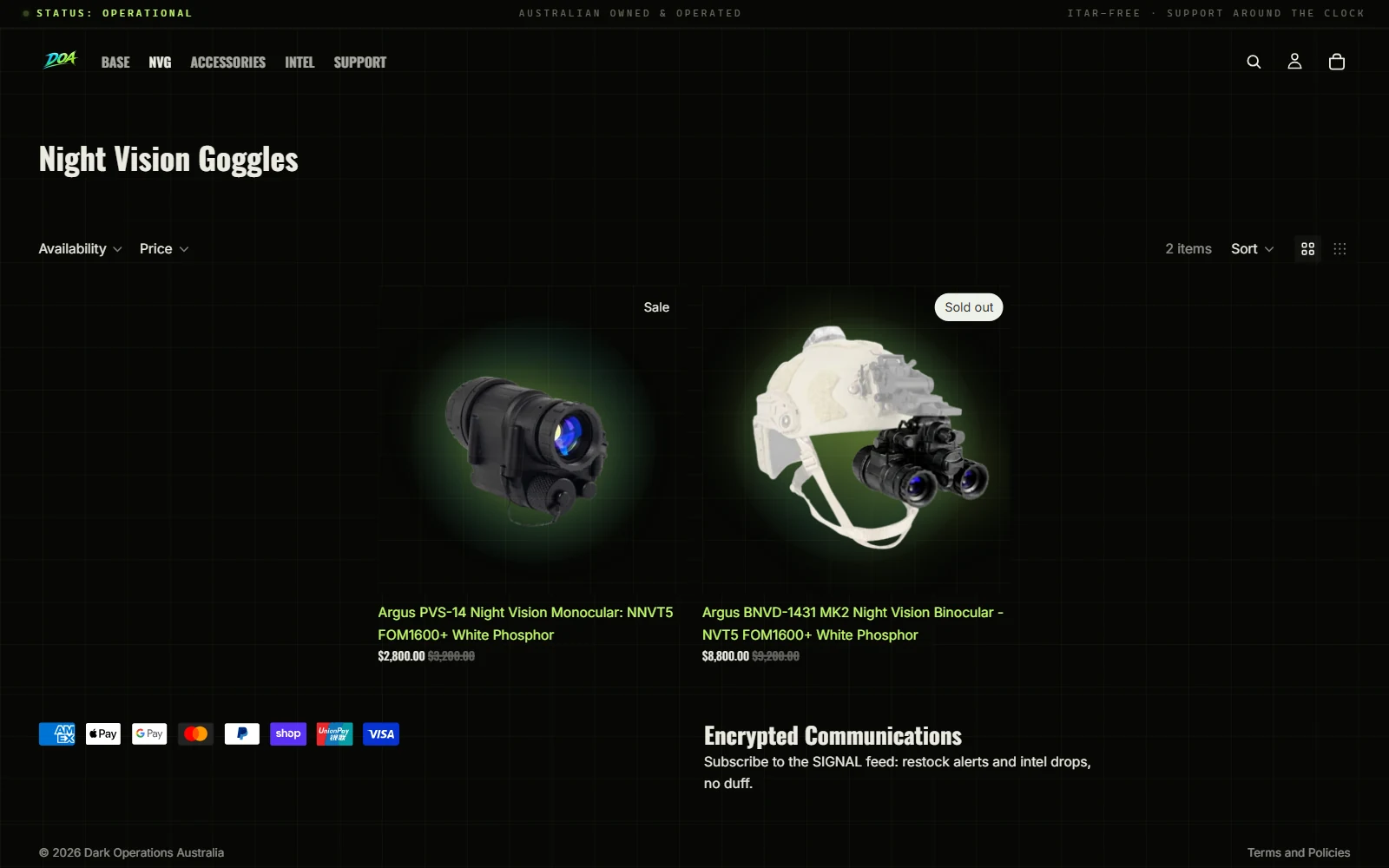
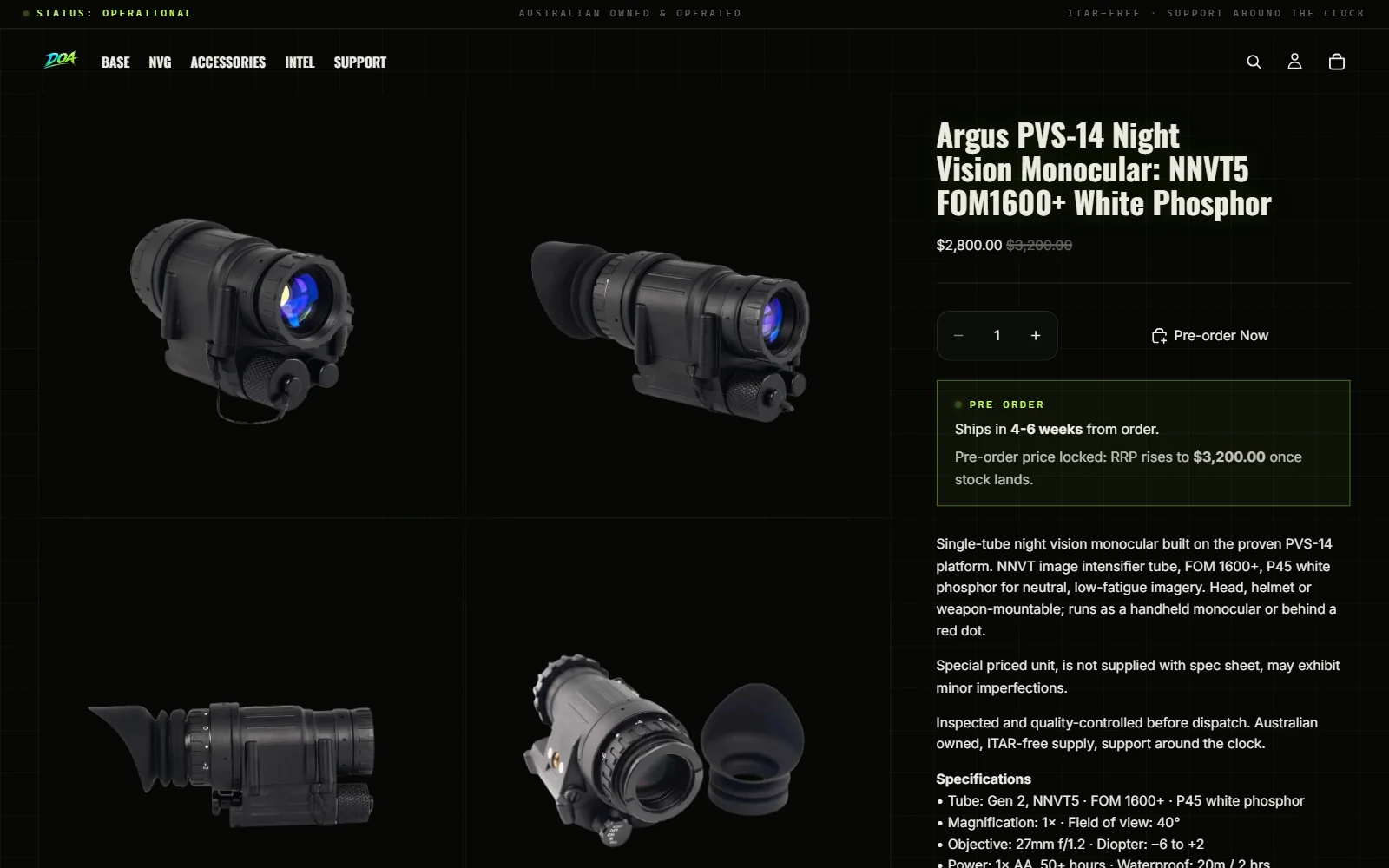
Current storefront capture · collection hierarchy and product-card structure (left) · product detail hierarchy and specification pathway (right)
05 · Before & after — structural, no figures
Before
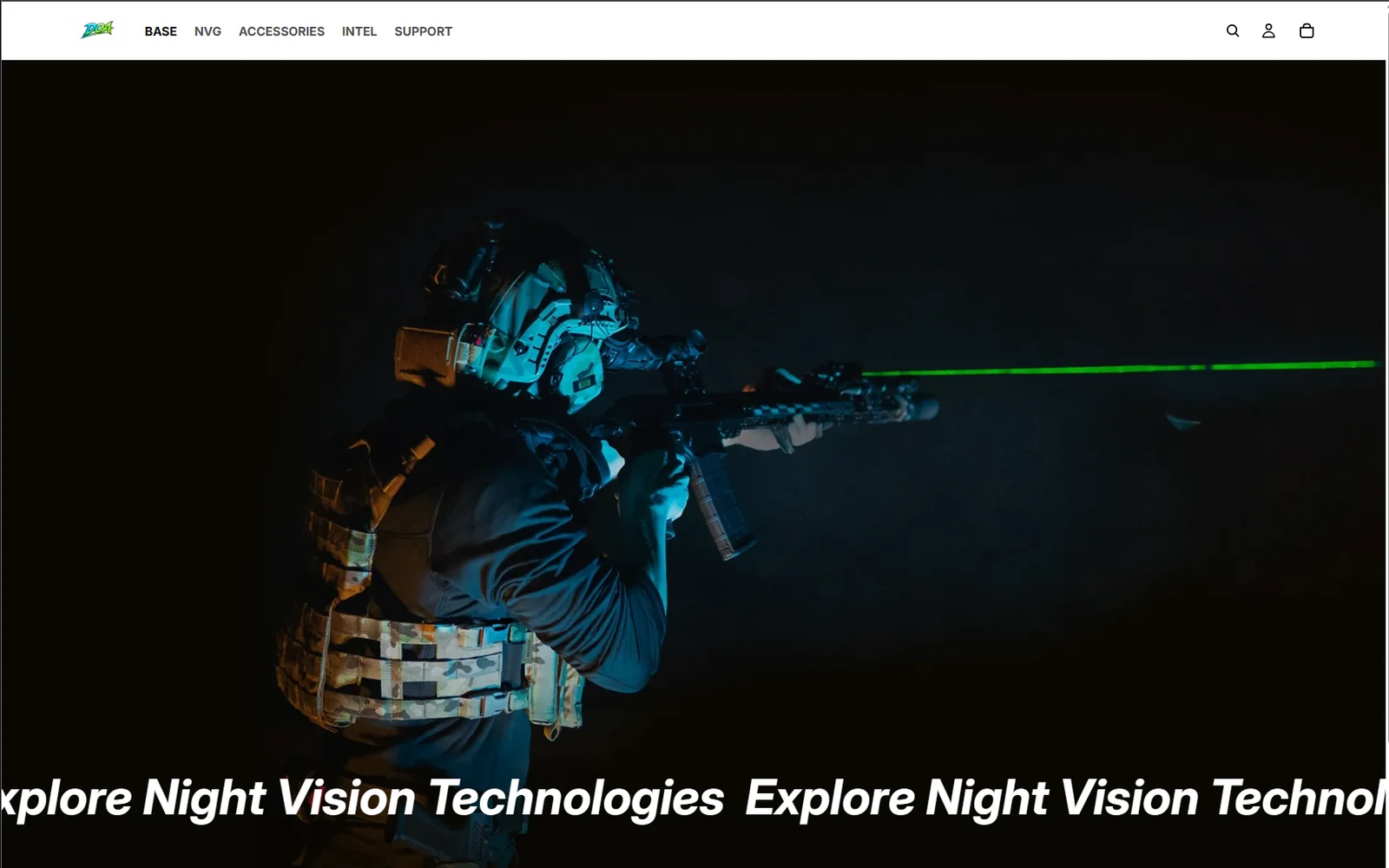
Earlier storefront state — visual context only.
After
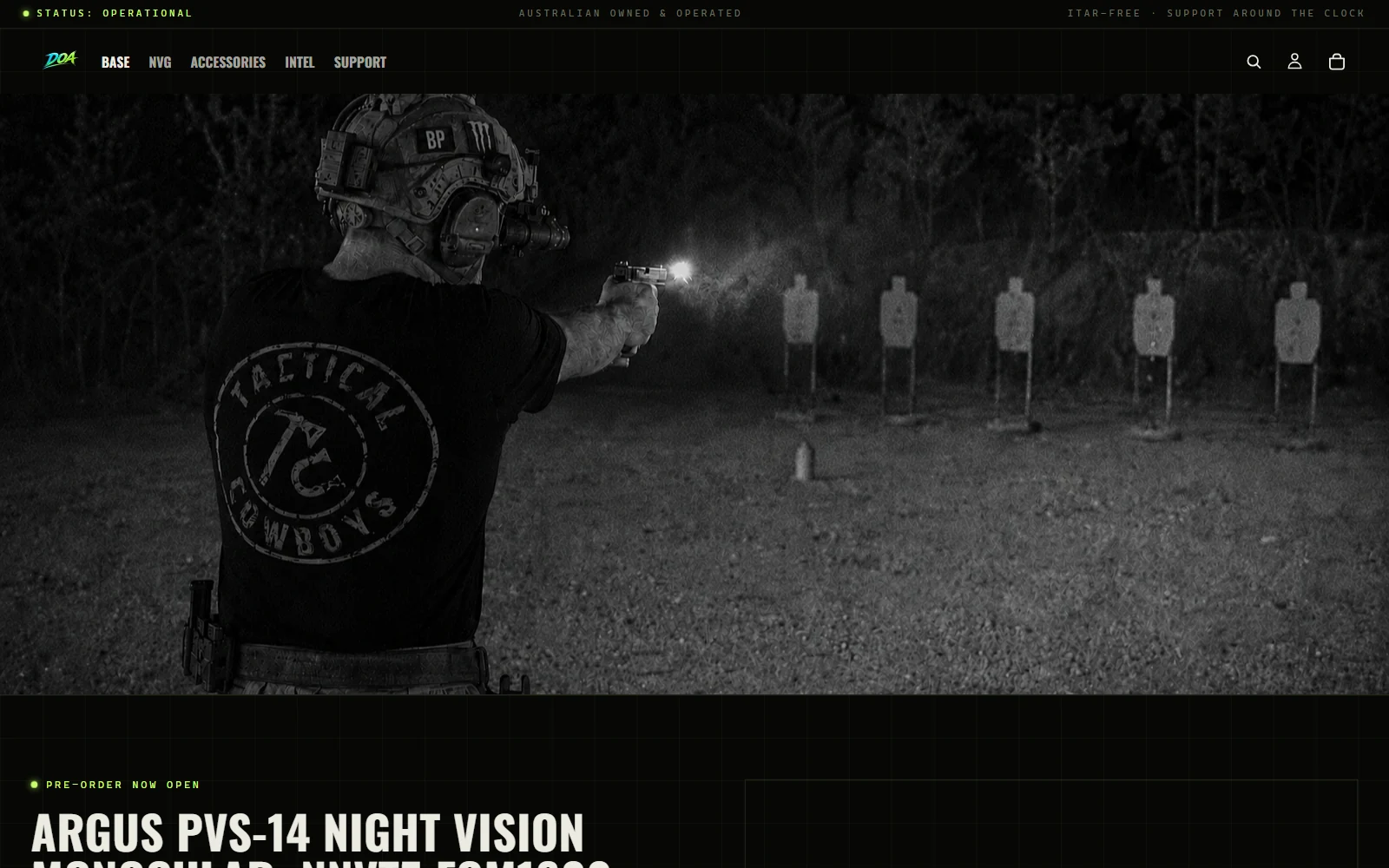
Current storefront state — visual evidence only.
The rebuilt storefront is deployed and under active, ongoing management — refined in place as the catalogue and brand presentation evolve, rather than handed back at launch. Commercial results stay with the client; what we present here is the system, not the numbers.
Deployed · ongoing managementOutcome / withheld
Send Brief